
The Five Deep Wounds You May Not Have Named

Some pain gets louder after the house goes quiet. You turn off the lamp and put down your phone.
The memory you managed all day climbs back into bed with you.
You’re tired of carrying something you can’t seem to set down.
The Five Deep Wounds is a framework from Rodney D. Nielsen’s book You Will Smile Again (Even If You Can’t See How Yet) that names five places where deep hurt tends to settle and shows how God meets us in each one.
Which one are you carrying?
Grief and loss. You miss someone or something so deeply that ordinary moments still carry the shape of what’s gone.
Rejection and betrayal. Someone you trusted wounded you, and now closeness feels more dangerous than it used to.
Shame and unworthiness. You keep turning the pain against yourself and wondering if you’re the problem.
Disappointment and shattered expectations. What you prayed for or counted on didn’t happen, and hope now feels harder to risk.
The hidden scars of trauma and fear. The moment passed, but fear still seems to enter the room before you do.
Grief and loss
Some losses leave an empty chair inside the day.
Grief and loss is the wound left when someone or something deeply loved is no longer within reach.
It can follow you into ordinary moments. You reach for the phone before remembering who won’t answer. You walk past a chair and feel the absence before you even think about it.
This wound can whisper that life will never feel full again. It can make tomorrow look smaller because someone important is missing from it.
God meets you in the place grief has broken open. You don’t have to pretend the loss mattered less than it did when you bring it to Him.
For today, don’t try to solve the rest of your life. Name what you miss most right now, and bring that one ache to God in plain words.
Read more: Will I Ever Be Happy Again? An Honest Answer
Rejection and betrayal
After betrayal, trust starts to feel expensive.
Rejection and betrayal is the wound of being pushed away or deeply hurt by someone whose love or trust mattered to you.
Sometimes it’s a spouse or a friend. Sometimes it happens at church.
You walk through the church doors carrying more than anyone can see. The place you entered for comfort may now hold a memory you can’t leave in the parking lot. You still want God, but you don’t know what to do with what happened there.
This wound can say, “If they could discard me, maybe I wasn’t worth keeping.”
You can take this to God without cleaning it up first. Bringing the wound to Him doesn’t require calling wrong things right or returning to an unsafe person or place.
Try this: separate the wound from your worth. Write down one thing their choice said about them. Then write one truth you refuse to let it say about you.
Read more: Hurt by the Church? You’re Not Alone & You Haven’t Lost God · How to Find Your Joy Again After Betrayal
Shame and unworthiness
Shame can become a label sewn into the inside of your shirt.
Shame and unworthiness is the wound that turns pain inward until you begin to believe something is wrong with who you are.
It doesn’t always shout. Sometimes it sits quietly behind the sentence, “People would see me differently if they really knew.” You may replay a failure or rejection until it starts feeling like a name.
No one else sees that label, but you feel it against your skin all day.
God comes looking for you in the place you most want to hide. You can bring Him the part of the story you’re ashamed of.
Catch the sentence shame keeps repeating. Write it down. Then refuse to use it as your name.
Disappointment and shattered expectations
You start bracing for the no before you’ve even finished praying.
Disappointment and shattered expectations is the wound that forms when the life you counted on doesn’t become the life you’re living.
You can do your best and pray with faith, then end up staring at an outcome you never prepared yourself to accept. The door doesn’t open. The answer you expected never comes.
This wound can tell you that hope was foolish because hope made the fall hurt more.
God meets you in the gap between what you hoped for and what actually happened. You can bring the disappointment to Him without renaming it gratitude.
Name the expectation that broke. Then ask God for enough courage to face this day without deciding that every future hope will end the same way.
The hidden scars of trauma and fear
Little by little, caution can begin making choices for you.
The hidden scars of trauma and fear are what’s left when something painful keeps shaping how you respond long after the moment has passed.
A slammed door or a certain smell can bring it all back in a second. Your body braces before your mind catches up. You may find yourself expecting what hasn’t happened because something once did.
Fear can tell you that staying guarded is the only way to stay safe.
God isn’t waiting for you to be brave first. You don’t have to hide the fear before you bring it to Him.
The next time fear reaches for the wheel, notice it. Pause there. Tell God what you’re afraid will happen, and ask for help with only the next step.
Why these five?
Pain rarely arrives wearing one name.
Grief can open the door to fear, and betrayal may leave shame behind. One wound can press against another until it becomes hard to tell which ache you’re carrying.
Naming the wound gives you a place to begin. Your details are your own, but the ache can feel strangely familiar. You may recognize yourself in more than one of these five. God meets people in each of those places.
Frequently asked questions
Why does church hurt feel worse than other hurt?
Church hurt can feel especially deep because the pain is tied to a place where you came looking for God and belonging. The same room that once comforted you may now hold a painful memory.
What happened there was real, and it matters. But the people who hurt you don’t get to decide what happens next between you and God.
Will I ever be happy again after loss?
Yes, joy can return after loss, even when you can’t picture what that would feel like yet. Grief can make tomorrow seem permanently smaller because someone or something deeply loved is gone.
Psalm 34:18 says, “The Lord is close to the brokenhearted and saves those who are crushed in spirit.” You don’t have to force tomorrow’s smile today.
Why didn’t God answer my prayer?
Sometimes the answer you wanted doesn’t come, and the disappointment is real. You don’t have to pretend it doesn’t hurt. You can tell God exactly how disappointed you are. You may not understand what happened, but you can keep talking to Him about it.
How do I stop feeling ashamed?
Start by saying the sentence shame keeps repeating out loud to God. Shame wants one painful part of your story to become your whole identity. It doesn’t deserve that authority. Bring the sentence into prayer, then remind yourself that one part of your story is not the whole of who you are.
Why am I still afraid after something painful happened?
Fear can linger after a painful moment is over, especially when something reminds you of what happened. That doesn’t mean your faith has failed. Tell God what you’re afraid of, and take the next step with Him. If fear is shaping most of your days, reaching out to a trusted counselor or doctor can be a wise and faithful choice.
You Will Smile Again
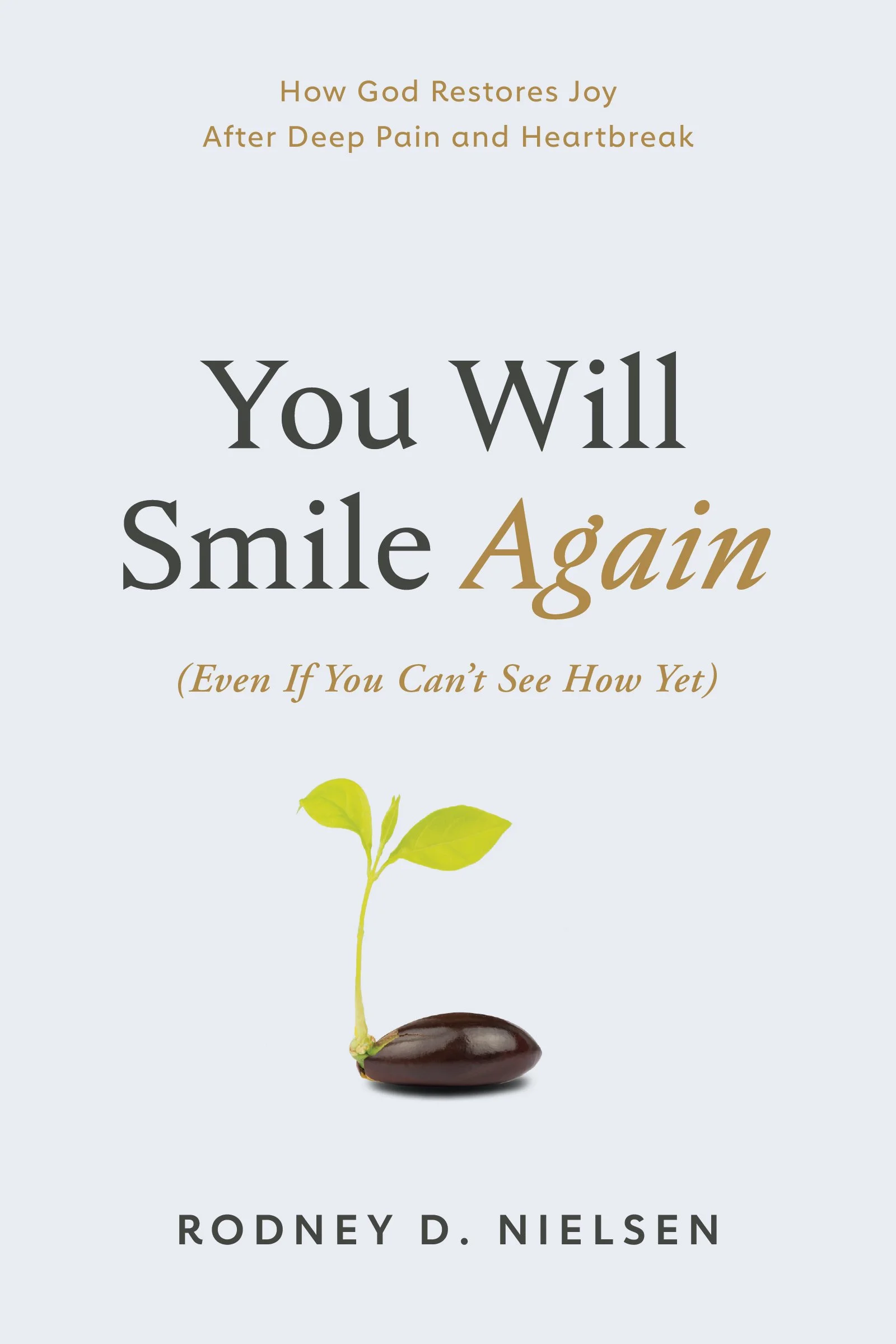
If you’re carrying pain you don’t know what to do with, this book offers Scripture-centered, practical steps toward finding joy again.
If you recognized yourself on this page, You Will Smile Again (Even If You Can’t See How Yet) picks up where this page leaves off.
It walks through these wounds with Scripture and daily habits for renewal, and it closes with a 30-day devotional guide.
You don’t have to know how everything gets better before you take the next step. You can begin by naming what hurts.
A passage from the book
Chapter 2: Common Traps in Suffering, pp. 40–41
There are some simple, but not easy, first steps you can take to begin moving out of these traps.
First, name the trap. Ask God to show you which pattern is strongest in your life right now. Are you mostly denying and suppressing your pain? Are you living in anger and blame? Are you stuck in self-pity and isolation? You may see traces of all three, but usually one will stand out. You might even write it down: “Right now, my tendency is to . . .” Naming the trap breaks some of its power. What stays vague stays powerful. What becomes clear can be addressed. We’ll circle back to what you write here in later chapters.
Second, confess it to God. Confession isn’t about beating yourself up. It’s about agreeing with God that this pattern is not His best for you. You might pray something like, “Lord, I see that I’ve been pretending I’m fine when I’m not,” or “Lord, I admit that I’ve been holding on to anger,” or “Lord, I confess that I’ve withdrawn into self-pity.” Bring the pattern into the light of God’s presence.
Third, invite God into the pain underneath the pattern. Denial, anger, and self-pity aren’t random behaviors. They’re responses to real wounds. Ask the Holy Spirit to show you what hurt you’re trying to avoid, control, or protect. You don’t need to uncover everything at once. Healing is often layer by layer. But even saying, “Lord, I’m willing to see what You want to show me,” opens a door.
Fourth, take one small step toward health. For someone stuck in denial, that step might be to tell one trusted person, “I’m not okay.” For someone stuck in anger, it might be to write out your complaints before God in a journal and then ask Him to help you forgive. For someone stuck in self-pity and isolation, it might be to accept a coffee invitation, attend a small group, or send a message asking for prayer.
Finally, be patient with the process. These traps are often years in the making. You won’t dismantle them in a day. But every honest prayer, every brave conversation, every moment of choosing truth over lies is a step toward freedom. God is far more patient with your progress than you are. And we’re going to keep walking this out together in the chapters ahead.
“Nielsen’s advice is welcoming, encouraging, and honest, challenging readers to unpack their own painful life experiences before true healing can begin.”
BookLife Reviews, by Publishers Weekly
"You are not crazy. You are not faithless. You are wounded. And you are seen."
-
Title: You Will Smile Again
Subtitle: How God Restores Joy After Deep Pain and Heartbreak
Author: Rodney D. Nielsen
Publisher: Overcomer Press
Release date: Tuesday, October 20, 2026
Page count: Approximately 216
Categories: Christian Living · Death and Grief · Forgiveness and Mercy
Includes: A thirty-day devotional guide
Paperback: ISBN 979-8-9966938-0-1
Hardcover: ISBN 979-8-9966938-1-8
eBook: ISBN 979-8-9966938-2-5
Audiobook: ISBN 979-8-9966938-3-2, releasing early November 2026
About Rodney D. Nielsen
More about Rodney →
Rodney D. Nielsen is a pastor with more than three decades of experience sitting with hurting people through late-night phone calls, hospital beds, gravesides, living rooms and altars. He is the author of You Will Smile Again and speaks on grief, church hurt, forgiveness and finding joy again after loss.
If your pain feels like more than you can carry, please reach out to a trusted pastor, counselor or doctor. If you’re in the U.S. and in crisis, call or text 988. If you’re in immediate danger, call 911 or your local emergency services.